Saturday, July 7, 2018

Purifying Your Blood

If your blood is pure then all problems will already get cleared. You will always feel fresh and healthy. 


Lets see how you can purify your blood...


1. Water

The simplest but one of the most effective detoxifiers is plain old water. Since urine is the means through which kidneys flush out toxins from the blood, having sufficient water is your best bet to keep the blood clean. As with a deep cleanse of your home, a proper purification regimen for your blood will require you to incorporate plenty of water into your diet. Staying hydrated can help your kidneys flush out the impurities in the body, aided by the fiber and minerals from all the other blood-purifying foods.Ayurveda outlines an ideal way to have water for detox benefits. Keep some warmed water in a copper vessel overnight and drink it next day in the morning when you wake up. The copper cools your liver and the water helps with waste elimination and purification of the blood.

2. Fresh Fruits

The pectin fiber in the skin of fruits like apples, guavas, plums, and pears is useful for detoxifying the blood. Besides binding with the excess fats in your blood as well as liver, pectin binds with heavy metals and other harmful chemicals or waste in your bloodstream and is then removed. In addition to this, lycopene found in red fruits and glutathione (both antioxidants) are useful for eliminating waste and chemicals.
Additionally, if you’re a fan of berries, you’re in luck. Studies state that they are high in antioxidants which prevent any damage to the liver such as lesions and fibrosis. They also inhibit the growth of liver cancer cells. So, incorporate options like cranberry and blueberries into your diet to keep your liver healthy.Alternatively, you could snack on grapes, especially red and purple ones. They contain resveratrol (a plant compound) which, like antioxidants, prevents any damage to the liver and ensures its smooth functioning.

3. Green Leafy Vegetables

Not everyone’s a fan of green leafy vegetables. But they can be very good for your blood, considering their abundant nutrient content – vitamins A and C, as well as B vitamins, folate, and iron. The antioxidants in these vegetables help remove harmful free radicals that damage blood cells. Choose from kale, spinach, Romaine lettuce, or even mustard greens and Swiss chard.

You may also want to try watercress. This delicious alternative helps increase enzymes in the liver that are responsible for detoxification. When you bite into watercress or chop it, it releases glucosinolates – a plant compound primarily present in pungent cruciferous vegetables – which breaks down to form indoles and isothiocyanates, chemical compounds that are known to eliminate carcinogens from the body. In one study on the effects of watercress intake on smokers, researchers found that just 170 gm a day resulted in higher levels of carcinogens being expelled in the urine, leaving the blood and body more purified.


4. Whole Grains

Whole grains are rich in fiber, which is a must-have in your diet if you’d like to rid your system of excess fat, chemicals, and waste. The high fiber content in foods like oats, whole grains, and wheat bran lowers blood cholesterol and glucose levels, cleanses your intestinal tract, eases constipation, and helps your body eliminate waste better.

5. Nuts

Nuts make for a good snack option, especially when you’re trying to eliminate toxins from your blood. They are high in fiber which, as stated earlier, lowers the levels of cholesterol and sugar in the blood. They are also high in vitamin E (an antioxidant) and beneficial monounsaturated fats. Studies state this composition makes nuts beneficial for the liver.
One such study found that eating nuts regularly improved the levels of liver enzymes in people with non-alcoholic fatty liver disease. To add to this, another study found that men who ate fewer nuts had a higher risk of developing the disease as opposed to those who ate large amounts.

6. Cruciferous Vegetables

In ayurveda, cabbage is considered to be a blood purifier. This leafy cruciferous vegetable has antioxidants like vitamins A and C that are good for your liver. Additionally, the fiber content in cabbage helps cleanse the digestive tract. It can neutralize chemical compounds like those in cigarette smoke and cleanse your liver too. Cabbage also contains glucosinolates which, as stated earlier, expel carcinogens from the body.
Much like cabbage, cauliflower, broccoli, and Brussel sprouts contain beneficial chemicals like sulforaphane, indole-3-carbinol, and 1-cyano-2-hydroxy-3-butene (CHB). These block cancer-causing chemicals – such as NNK in cigarette smoke and increase the levels of natural antioxidant enzymes required to kickstart the detoxification process. This is especially important when the body is overloaded with toxins – that’s when the levels of natural antioxidants go down and the detoxification process slows down.

7. Beetroot

Beetroot is a natural source of nitrates and antioxidant betalains which can reduce inflammation and oxidative damage in the liver. Several studies conducted on rats show that beetroot juice increases the production of enzymes that naturally detoxify the body.23However, human studies are still required to fully understand beetroot’s detoxifying potential.

8. Garlic

Garlic is antibacterial spice and can cleanse your system of viruses and parasites that could harm it. This pungent food removes excess fat from the blood. In the bargain, it lowers the levels of bad LDL cholesterol and total serum cholesterol in your body.

9. Turmeric

Turmeric on its own is a wonderful natural healer that can fight inflammation. It can help treat liver trouble and even keep it functioning optimally. And this is important because the liver and kidneys are the two primary centers for cleansing the blood of impurities and purging them from the body.
When this golden spice is combined with milk, its purification powers go up a notch. Turmeric milk figures prominently in liver cleanse diets in ayurveda. One such diet recommends turmeric milk that has been infused with spices like black pepper, cardamom, cinnamon, clove, and ginger for 72 hours. This drink is supposed to help your body generate fresh red blood cells besides plying your system with nutrients and acting as a good health tonic.

10. Lemon

Warm water with lemon juice is recommended in both ayurveda and naturopathy as a good start-of-day drink to cleanse the blood. As per ayurveda, this helps release the “ama” or toxins in your digestive tract, cleansing your system.
Research also backs this up. The warm water aids in the breakdown of fat and also eases the load on your kidneys, while the vitamins and minerals in the lemon help the body detox.
Stay Healthy...Take care...

Taking Care Of Your Brain...

Most important organ of our body " Brain". 
Taking care of your brain is very important for healthy life. 

Here are the 10 ways to take care of your brain...
1. Remember to…practice good nutrition. 


We can choose foods that help protect our brains. The good news is, if you are one of the many adults who try to follow a "heart smart" diet, you are also on track for "brain smart" menu choices. A 2010 study by Columbia University researchers confirmed that a high level of "good cholesterol" (HDL) is associated with a lower risk of dementia. Avoid: cholesterol, saturated fats, trans fats. Choose: fish, fruits, vegetables, and healthy fats such as olive oil or canola oil. Take a multivitamin—but don't take megadoses that could be toxic. Even on a day-to-day basis, nourishing meals improve alertness and help us retain memories.
2. Remember to…stay physically active. 


Just as a "heart smart" diet helps protect the brain, heart-strengthening aerobic exercise improves memory and even lowers the risk of dementia. A National Institute on Aging-funded study this year showed that moderate aerobic exercise can actually increase the size of the area of thebrain involved in memory formation. Indeed, according to a study by University of Wisconsin-Milwaukee researcher J. Carson Smith, "If you are at genetic risk for Alzheimer's disease, the benefits of exercise to your brain function might be even greater than for those who do not have that genetic risk." Talk to your healthcare provider about an exercise program that is right for you.
3. Remember to…sleep well. 


You've probably noticed that when you don't get enough good quality sleep, it is harder to concentrate the next day. And did you know that memories of the day are "filed away" in the brain while we sleep? People who suffer from sleep disturbances often experience memory problems. But many sleep disorders are treatable, so speak to your healthcare provider if you experience trouble falling asleep, bothersome wakeful periods during the night, or snoring (which might suggest sleep apnea—a disorder that causes interruption in breathing during sleep).
4. Remember to…treat depression and avoid stress.


 Both cause chemical changes that can damage the brain. If you are feeling overly stressed, or if depression is making it hard for you to focus and concentrate, talk with your healthcare provider. Counseling, meditation and other relaxation techniques can all help.

5. Remember to…quit smoking and limit alcohol consumption. 


Many substances found in cigarette smoke damage the brain and impair memory. A 2010 study from Kaiser Permanente demonstrates a startling 172% increased risk of dementia among heavy smokers! And while a number of studies suggest that drinking in moderation might actually be beneficial, having more than a drink or two per day can be toxic to the brain.

6. Remember to…challenge your mind and memory.


 Mental stimulation encourages new connections between brain cells…so when it comes to the memory, "use it or lose it" isn’t just a cliché. Seek out a variety of mentally challenging activities. Learn a new skill—take up an instrument or study a foreign language. Join a club, volunteer, find extra ways to increase brain-protecting social interaction. Visit a museum or work a difficult puzzle. Passive activities, such as watching TV, don't offer the same benefits.

7. Remember to…have a memory fitness strategy. 


It is actually possible to increase memory sharpness through training. Visualization, concentration and other effective memory skill techniques skills improve the retention and accessing of memories. And people of every age now use supplemental technology—everything from simple sticky notes to voice recorders, personal organizers, day planners…the possibilities are endless.
8. Remember to…use seatbelts and wear a bike helmet. 

\


Head injury can cause catastrophic damage to the brain and memory. And whether on the road or at home, take proactive steps to protect against falls. Remove clutter that might trip you up, install handrails by stairs and in the bathroom if needed, and ask your healthcare provider about a fall prevention class.
9. Remember to…bring up memory concerns at your next healthcare appointment.


Share with your doctor if you have experienced problems, especially disorientation, forgetting recently learned information, or a sudden inability to complete familiar tasks. While it's tempting to be in denial about memory impairment, early diagnosis of conditions such as Alzheimer's or mini-strokes allows treatment to begin right away. And when problems stem from a reversible or controllable condition, the sooner treatment begins, the better!
10. Remember to…have your healthcare provider review your medications.


 Our lives are improved and extended by many of the medicines we take—but overmedication and the side effects of some drugs can dull the memory. Common culprits: tranquilizers, sleeping pills, pain medications, high blood pressure drugs. Your physician may switch you to a different drug or dosage to lessen the effect.
Why add stress to your life by worrying about your memory? Learn about the normal memory changes associated with aging, do all you can to take care of your brain, check out memory compensation strategies…and relax, knowing you're doing everything you can to keep your memory strong through your later years.
Stay healthy andTake care... Thank You.

Friday, July 6, 2018

Human's Health


Introduction

Climate change, together with other natural and human-made health stressors, influences human health and disease in numerous ways. Some existing health threats will intensify and new health threats will emerge. Not everyone is equally at risk. Important considerations include age, economic resources, and location. Preventive and adaptive actions, such as setting up extreme weather early warning systems and improving water infrastructure, can reduce the severity of these impacts, but there are limits to the effectiveness of such actions in the face of some projected climate change threats.
Climate change presents a global public health problem, with serious health impacts predicted to manifest in varying ways in different parts of the world. Public health in the U.S. can be affected by disruptions of physical, biological, and ecological systems, including disturbances originating in the U.S. and elsewhere. Health effects of these disruptions include increased respiratory and cardiovascular disease, injuries and premature deaths related to extreme weather events, changes in the prevalence and geographical distribution of food- and waterborne illnesses and other infectious diseases, and threats to mental health.

Key weather and climate drivers of health impacts include increasingly frequent, intense, and longer-lasting extreme heat, which worsens drought, wildfire, and air pollution risks; increasingly frequent extreme precipitation, intense storms, and changes in precipitation patterns that lead to drought and ecosystem changes (Ch. 2: Our Changing Climate); and rising sea levels that intensify coastal flooding and storm surge (Ch. 25: Coasts). Key drivers of vulnerability include the attributes of certain groups (age, socioeconomic status, race, current level of health – see Ch. 12: Indigenous Peoples for examples of health impacts on vulnerable populations) and of place (floodplains, coastal zones, and urban areas), as well as the resilience of critical public health infrastructure. Multi-stressor situations, such as impacts on vulnerable populations following natural disasters that also damage the social and physical infrastructure necessary for resilience and emergency response, are particularly important to consider when preparing for the impacts of climate change on human health.

Wide-ranging Health Impacts

Air Pollution

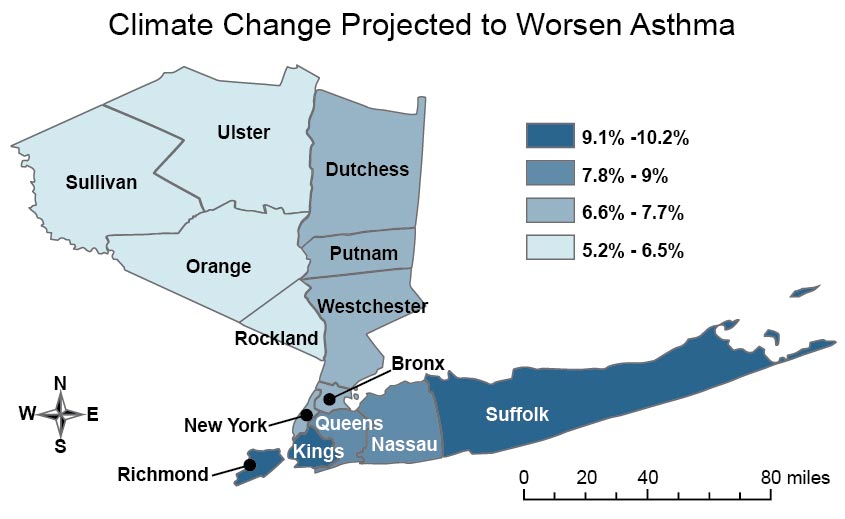
Climate change is projected to harm human health by increasing ground-level ozone and/or particulate matter air pollution in some locations. Ground-level ozone (a key component of smog) is associated with many health problems, such as diminished lung function, increased hospital admissions and emergency room visits for asthma, and increases in premature deaths.,,,
Figure 9.1: Climate Change Projected to Worsen AsthmaClimate Change Projected to Worsen AsthmaDetails/Download
Factors that affect ozone formation include heat, concentrations of precursor chemicals, and methane emissions, while particulate matter concentrations are affected by wildfire emissions and air stagnation episodes, among other factors., By increasing these different factors, climate change is projected to lead to increased concentration of ozone and particulate matter in some regions.,,,,,,,,,
Increases in global temperatures could cause associated increases in premature deaths related to worsened ozone and particle pollution. Estimates made assuming no change in regulatory controls or population characteristics have ranged from 1,000 to 4,300 additional premature deaths nationally per year by 2050 from combined ozone and particle health effects.,, There is less certainty in the responses of airborne particles to climate change than there is about the response of ozone. Health-related costs of the current effects of ozone air pollution exceeding national standards have been estimated at $6.5 billion (in 2008 U.S. dollars) nationwide, based on a U.S. assessment of health impacts from ozone levels during 2000 to 2002.,

Allergens

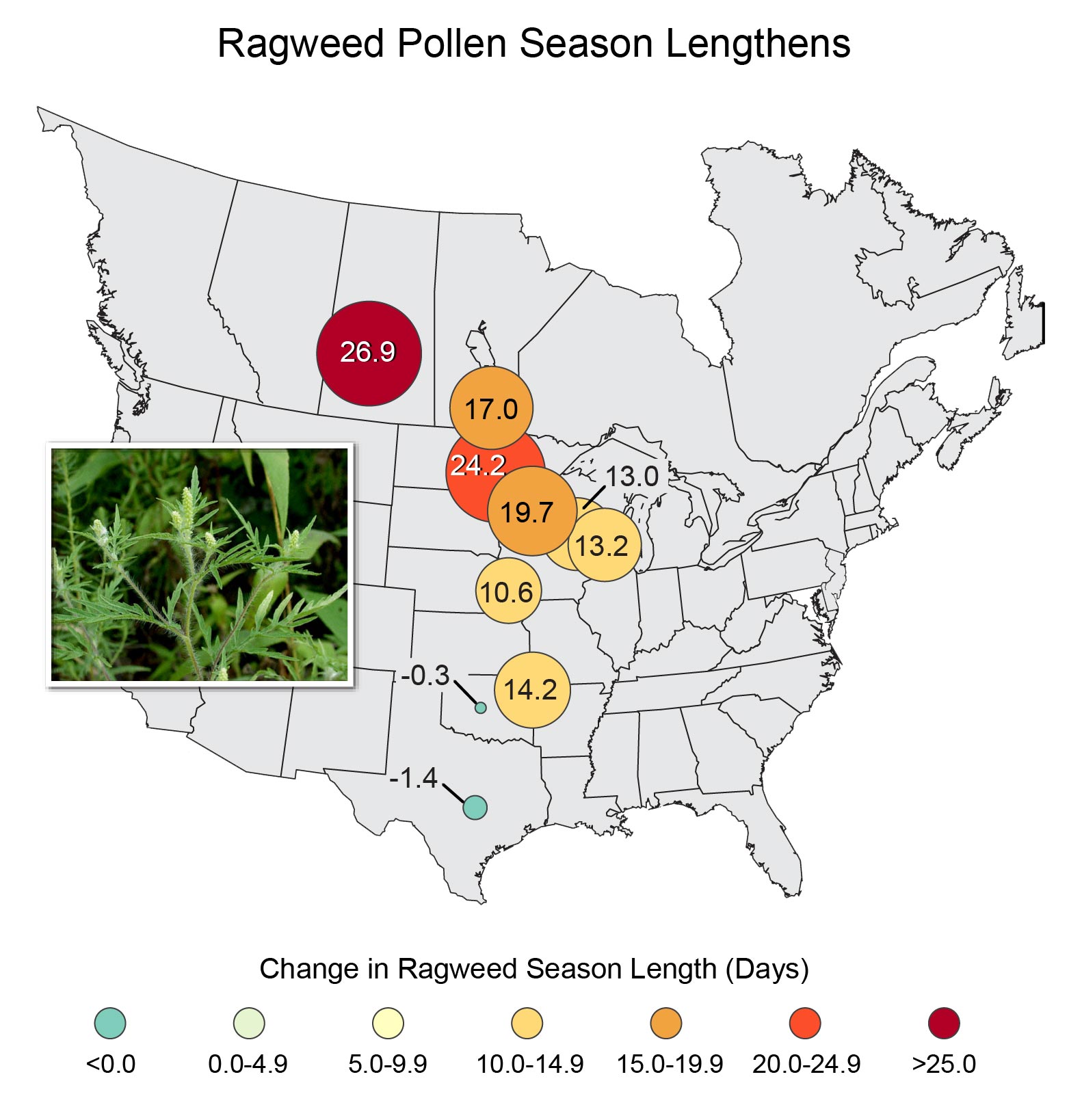
Climate change, resulting in more frost-free days and warmer seasonal air temperatures, can contribute to shifts in flowering time and pollen initiation from allergenic plant species, and increased CO2 by itself can elevate production of plant-based allergens.,,,,,, Higher pollen concentrations and longer pollen seasons can increase allergic sensitizations and asthma episodes,,,, and diminish productive work and school days.,,
Figure 9.2: Ragweed Pollen Season LengthensRagweed Pollen Season LengthensDetails/Download
Simultaneous exposure to toxic air pollutants can worsen allergic responses.,,, Extreme rainfall and rising temperatures can also foster indoor air quality problems, including the growth of indoor fungi and molds, with increases in respiratory and asthma-related conditions.,,, Asthma prevalence (the percentage of people who have ever been diagnosed with asthma and still have asthma) increased nationwide from 7.3% in 2001 to 8.4% in 2010. Asthma visits in primary care settings, emergency room visits, and hospitalizations were all stable from 2001 to 2009, and asthma death rates per 1,000 persons with asthma declined from 2001 to 2009. To the extent that increased pollen exposures occur, patients and their physicians will face increased challenges in maintaining adequate asthma control.

Wildfires

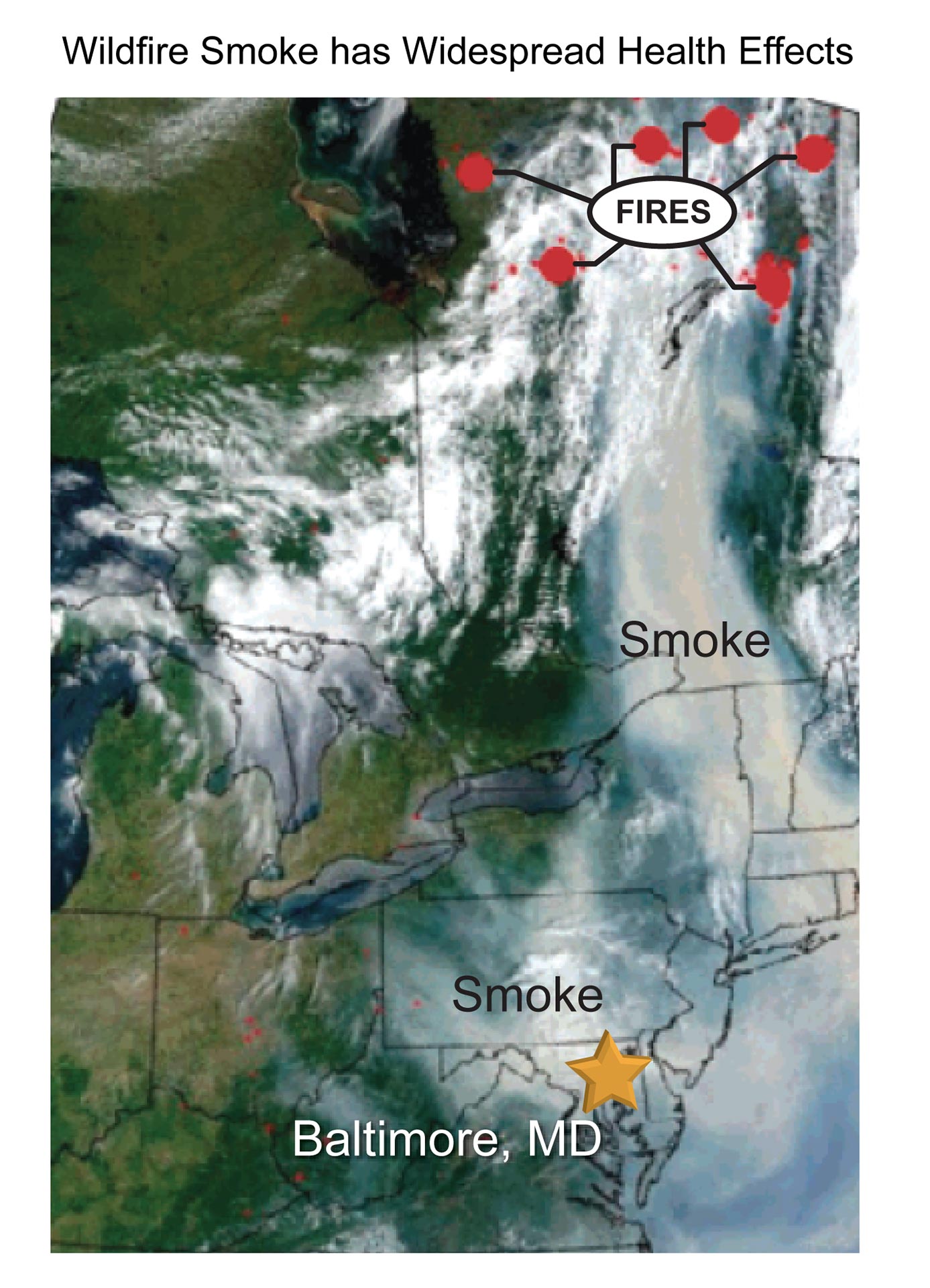
Climate change is currently increasing the vulnerability of many forests to wildfire. Climate change is projected to increase the frequency of wildfire in certain regions of the United States (Ch. 7: Forests).,,,,, Long periods of record high temperatures are associated with droughts that contribute to dry conditions and drive wildfires in some areas. Wildfire smoke contains particulate matter, carbon monoxide, nitrogen oxides, and various volatile organic compounds (which are ozone precursors)and can significantly reduce air quality, both locally and in areas downwind of fires.,,,,
Figure 9.3: Wildfire Smoke has Widespread Health EffectsWildfire Smoke has Widespread Health EffectsDetails/Download
Smoke exposure increases respiratory and cardiovascular hospitalizations, emergency department visits, and medication dispensations for asthma, bronchitis, chest pain, chronic obstructive pulmonary disease (commonly known by its acronym, COPD), respiratory infections, and medical visits for lung illnesses.,, It has been associated with hundreds of thousands of deaths annually, in an assessment of the global health risks from landscape fire smoke.,,,, Future climate change is projected to increase wildfire risks and associated emissions, with harmful impacts on health.